
The Quiet Weight of What's for Dinner: Easing Mealtime Battles at Home
Some days, the hardest question I face isn't about behaviour or bedtime. It's what's for dinner.
If you feel a quiet dread creeping in around five o'clock, you're not alone. Mealtime battles are one of the most common struggles parents bring to me, whatever their children's ages. And if your child pushes their plate away, picks out every green thing or tells you dinner looks disgusting, it doesn't mean you're getting it wrong. It means you're feeding a real child, with real preferences, at the end of a long day.
The good news is that the table can feel calmer. Not by finding the perfect recipe or winning the argument, but by starting with how you feel, getting curious about how your child feels, and letting go of a few beliefs many of us were raised with.
I'm a mum of two boys and a parenting coach, and this isn't a post about how you should feed your children. It's about the weight that comes with feeding a family, and what has helped in my own kitchen.
Why mealtimes feel so heavy
Before I had children, I enjoyed cooking much more than I do now. Nobody tells you how much sits on that one plate.
Is it balanced? Will they eat it? Have they had enough vegetables this week? It joins the long list of things we quietly carry as parents, alongside screen time, fresh air and everything else.

Food is one of the few things children control
Eating, like sleeping and using the toilet, is one of the few areas where our children truly have control. We can put the food in front of them, but we can't make them swallow it. So when they want a say, the plate is often where they find it.
That's why we hear it all: too salty, too spicy, too soggy, too chewy. My youngest's favourite is "It's brown, it looks like the cat's food."
It changes shape as they grow
With older children, the battles don't disappear. They just look different. It might be the after school snacking that leaves no room for dinner, or a sigh and a "This again?" when you put the plate down.
And I'll be honest. When I set the plates on the table, I often brace myself for the comment that's coming. If you do too, it says nothing about your cooking or your parenting. It says you care.
"Clear your plate": what many of us grew up with
When I was growing up, my parents would say things like, "You don't leave the table until your plate is empty, or you'll see the same meal again at the next one." Or I'd be reminded of all the children around the world with nothing to eat.
Maybe you heard something similar. Maybe you've caught yourself saying it.
For a long time, I heard those words as punishment and guilt. Now I see my parents with more compassion. They wanted me to be strong and well fed, and they didn't have other tools.
Rethinking the empty plate
One of the beliefs worth questioning is that a good meal ends with a clean plate. When finishing becomes the goal, children can learn to ignore their own sense of fullness, and the table turns into a place of pressure rather than connection. Research from Loughborough University found that young children who were pressured to eat tended to avoid food even more, and the researchers note that healthy children are born able to recognise when they're hungry and when they're full.
You can still hold expectations and care about what your children eat. The shift is from making them finish to helping them feel safe enough to try.
When "I don't like it" is information, not defiance
What helps me most is remembering that every child has their own reasons for not wanting something. Texture, smell, colour, a bad memory of a meal last month, or simply being tired and overwhelmed by the end of the day.
Children also tend to be more sensitive to bitter flavours than adults. Researchers at the Monell Chemical Senses Center found this stays true until around the teenage years. My son discovered something similar in one of his fact books, and now we all talk about it at the table. No wonder sprouts can feel like a battle.
Once I knew this, "I don't like it" stopped sounding like defiance and started sounding like information.
Listening before explaining
When my youngest lists every reason he won't eat his beef noodles, I don't shout and I don't argue. I listen. Then I explain why I'd like him to try, because in our family health matters.
More often than not, he tries it. Usually he eats it. It takes energy and patience, and it doesn't work every single night. But it keeps us connected, even when the plate comes back half full.
Start with yourself before you sit down

When the dread creeps in, it's tempting to focus straight on the children. But the calmest mealtimes in my house begin with a quiet moment of checking in with myself. These are the three questions I ask before I sit down at the table.
What exactly is making me feel like this tonight?
Often I'm juggling too many things at once, and the tension I'm carrying has very little to do with what my children eat. Naming it helps me leave it at the kitchen door, rather than bringing it to the table.
What could make the next thirty minutes a little more enjoyable?
For me, it might be music while I cook, a podcast, or a call to my mum. Small things that refill me a little before I need to give again.
How do I want my children to remember our mealtimes?
This is the newest question in my collection, and it's become my favourite. It moves me from dread back towards gratitude, and reminds me that the real goal is connection, not a clean plate.
Easing mealtime battles: small things to try tonight
None of these will transform dinner overnight, and that's not the aim. They're small, doable shifts that take some of the pressure off, for you and for your child.
Cook one meal, with something familiar on the plate
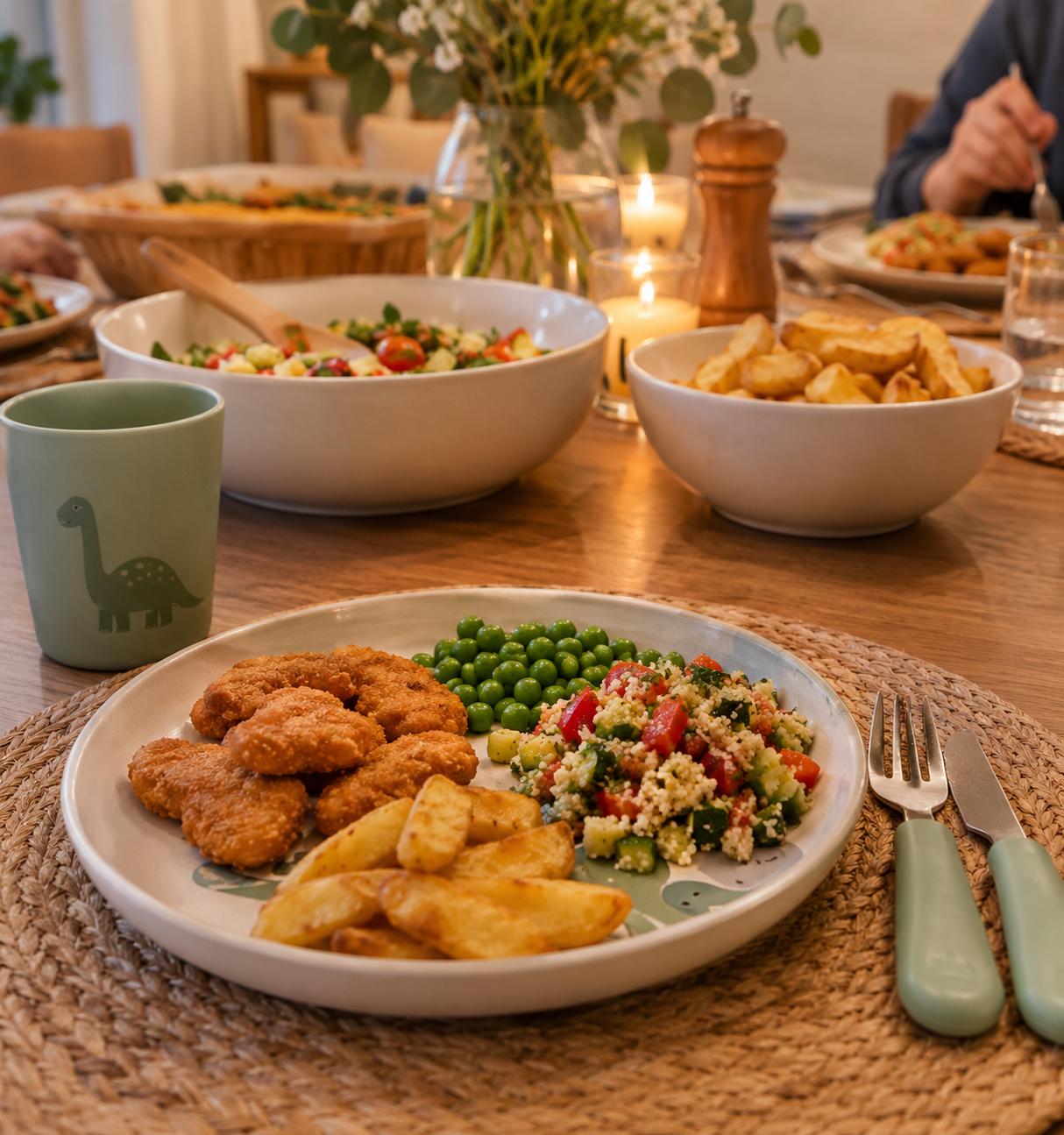
In our house, I cook one meal for everyone. I try to make sure there's always something on each plate I know my boys will eat, so nobody sits down feeling there's nothing for them. It also means I'm not running a restaurant at the end of a long day. This fits with NHS advice for fussy eaters, which suggests offering new foods alongside ones your child already likes, rather than making separate meals.
Keep one simple rule
We have one rule at our table: try it at least once. That's it. A single taste is enough, and often it's the start of something.
Listen to the complaints, then adapt where you can
I do listen when my children tell me mushrooms or onions feel too slimy. I still put them in, but I chop them very, very small so they barely notice. Listening doesn't mean giving up on what matters to you. It means meeting your child where they are.
Ask one curious question
Instead of "Just eat it," try "What is it about this one you don't like?" You might be surprised by the answer, and your child will feel heard rather than pushed. A fussy eater often softens when they sense you're on their side.
Give older children a hand in what's on the plate
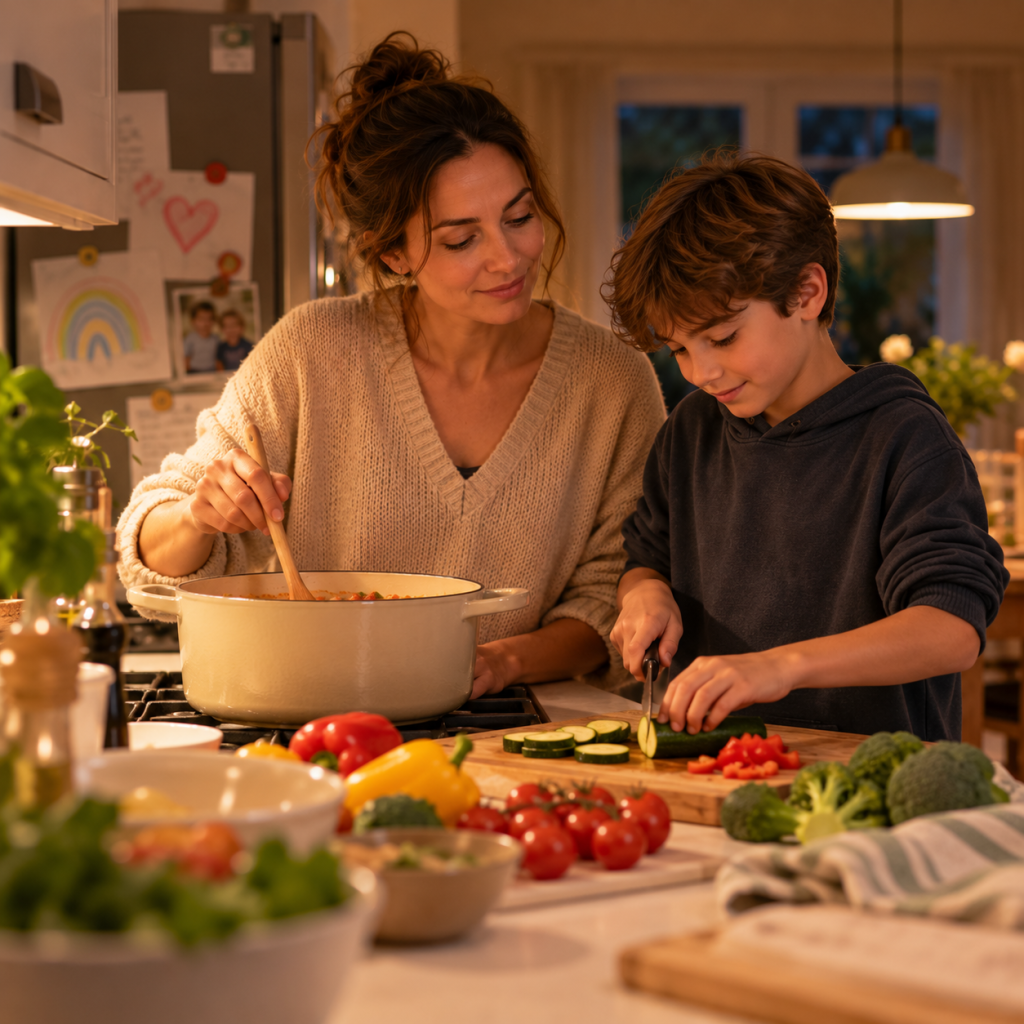
With older children, invite them to choose or cook one meal a week. I often do this with my eldest. When they've had a hand in planning it, "This again?" tends to disappear, and you get some lovely time together in the kitchen too.
Frequently asked questions about fussy eating
Should I make my child finish their plate?
I'd encourage you not to. Pressure to finish can teach children to override their own hunger and fullness, and it often makes mealtime battles bigger. One study published in Pediatrics found that more than half of parents asked their child to clear their plate, and the lead researcher explained that this pressure takes away a child's natural ability to respond to their own hunger. Inviting them to try, and trusting them to stop when they've had enough, tends to build a calmer relationship with food over time.
Is it okay to hide vegetables in meals?
Chopping or blending vegetables so they're less noticeable can be a helpful bridge, and I do it myself. I'd pair it with honesty and plenty of chances to see and try vegetables as they are, so your child gets to know them rather than only meeting them in disguise.
Should I cook separate meals for my fussy eater?
You don't need to. Cooking one family meal and including at least one food you know your child will eat gives them a safe option without you becoming a short order cook every evening.
What can I do about after school snacking spoiling dinner?
Children are often genuinely hungry after school, so it helps to plan a filling snack at a set time rather than ban snacks altogether. Leaving a gap of a couple of hours before dinner gives their appetite a chance to come back.
When should I worry about my child's eating?
Most fussy eating is a normal part of growing up. NHS guidance suggests keeping a food diary for a week, as children are often eating a wider variety than we think. If your child is losing weight, eats a very small range of foods, seems distressed around food, or you simply have a niggling worry, it's always worth speaking to your GP or health visitor.
A calmer table, one meal at a time
Feeding a family carries a weight that so few of us saw coming. If dinner time has been feeling heavy lately, please know it isn't a sign you're failing. It's a sign of how much you care.
You don't have to get every meal right. Start with yourself, stay curious about your child, and let the small moments of connection count for more than what's left on the plate. Some nights will still be hard, and that's okay. Every new meal is a fresh chance to begin again.
I'd love to hear from you. What's the funniest reason your child has given for not eating a meal?
And if mealtimes, or the feelings that come with them, are something you'd like more support with, I'm here. Through my 1:1 coaching and my online programmes, I work with parents to understand what's really going on beneath the struggles and to build calmer, more connected days at home. You're very welcome to get in touch whenever you feel ready.
With love, Caro x