
When Play Doesn’t Come Easily: Inviting Your Child Into Your World
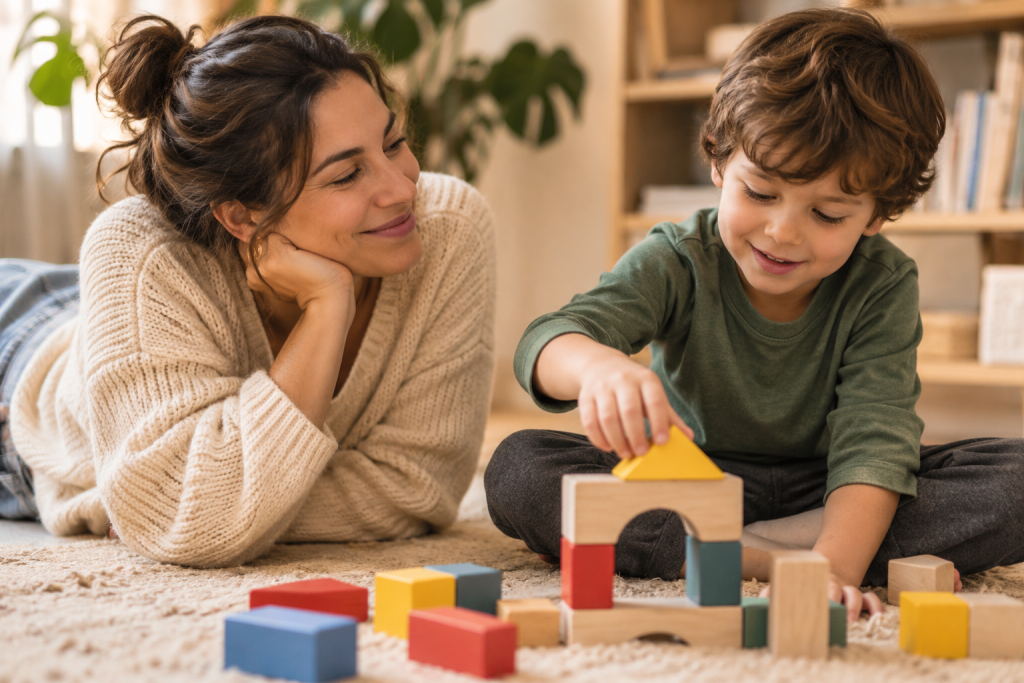
Play didn't come easily to me. When my children were little, I thought I knew exactly what play looked like. It was me on the floor, pushing toy cars along a pretend road, or building towers out of little blocks just so they could be knocked down again.
Even now, there are days I sit there wondering if I'm doing it right. My six year old will still say, "Not like that, Mummy!" What he really wants is for me to be there, watching how he plays.
I'll be honest. Play didn't come easily to me with two boys, and I'm still working on it. When I was little, I played with dolls and games that didn't involve Nerf guns, cars or football.
If you don't enjoy playing every game with your child, please hear this first: you're not alone, and it doesn't make you a bad parent. Many loving, devoted parents feel exactly the same. And there's another way to think about play that might take some of the pressure off.
We often see play as only what our children want to play. But it can work the other way round too. We can invite our children into our play, just as they invite us into theirs.
Play changes shape as children grow
Play doesn't disappear as our children grow. It changes shape.
When they're little
When children are small, play often means letting them lead. Sometimes the invitation is simply to sit beside them and be their audience. That counts too.
You don't have to be the best car racer or tower builder in the room. Your attention is what they're really asking for.
As they get older
As they grow, the cars and dolls slowly turn into interests and hobbies. The same is true for us. Our play might be a sip and paint evening, baking a cake or a round of mini golf.
For me, play is a moment of presence and connection. It's an invitation into someone's world, and a chance to invite them into yours. Both strengthen the bond between you.
Turning it round: inviting your child into your play
This half term, I spotted two craft workshops nearby and I was so happy. I love making things with my hands, and I could take one of my children to each.
In the morning, I went pumpkin crafting with my youngest. We were both completely absorbed, and we loved every minute.
In the evening, there was a session for mums and older children, so I invited my 11 year old. He was keen, even though crafting isn't something he does much. Perhaps it felt a little awkward at first, as he was the only boy there.
But he really enjoyed it. We made fabric pumpkins, learnt something new and chatted about all sorts. He had a lovely hot chocolate too. It was one of those evenings we'll both remember.
I call that play. When I told my husband about our day, I said I'd played with the boys. Only this time it was the other way round. They came to play with me.
Finding the middle point
Since becoming a parenting coach, I've learnt that play doesn't always come easily to us as parents, and there can be many reasons for that. Perhaps it wasn't part of your own childhood. Perhaps you're simply running on empty by the evening. Or perhaps your child's favourite games just don't light you up.
It's OK if you don't enjoy every kind of play your child loves. As I've been learning to understand my way of playing and theirs, we've often found a middle point where the two meet.
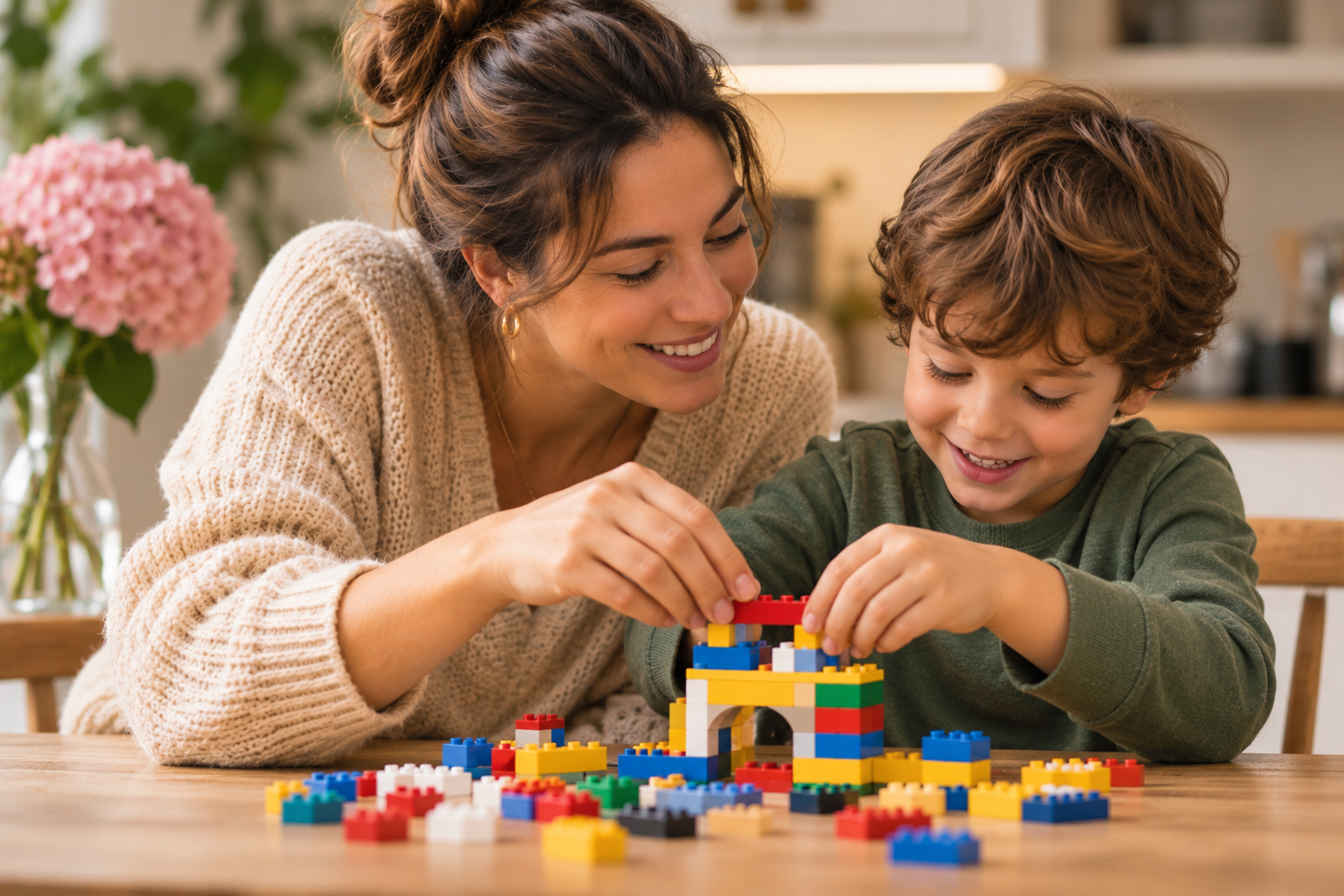
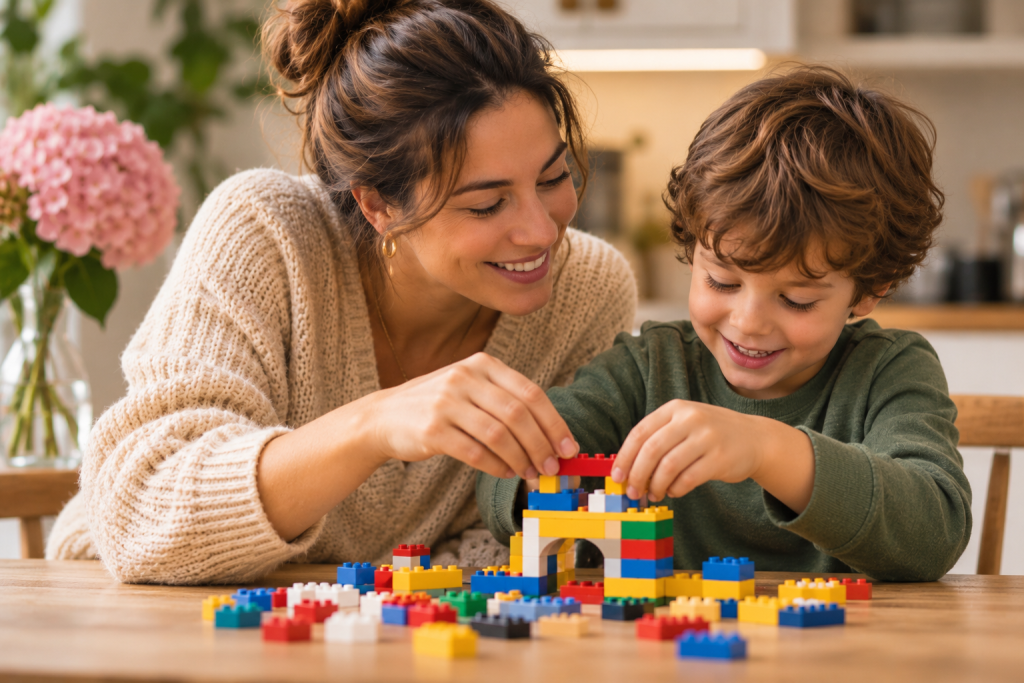
For us, at the moment, that's Lego. We can all sit and build side by side, and we love it. Your middle point might be a board game, a kitchen disco, a walk with the dog or drawing at the same table.
I know that at the end of a long day, the last thing you might feel like is play. Some days I don't either. And that's alright.
How to play with your child when you don't enjoy some games
Here are three questions to sit with this week.
What do you love doing?
It could be reading, swimming, tennis, pottery or climbing. As adults, we don't usually call these things play. We'd call them a hobby, time for ourselves, or simply something we enjoy.
Hardly anyone says "I'm off to play tennis" and thinks of it as play in the way children play. But maybe it is.
When did your child last see you playing?
Children learn so much from watching us. When they see you absorbed in something you love, they learn that curiosity and joy don't end when you grow up.
Could you invite them to join you?
With little ones, it might be letting them stir the cake mix (mess included) or dancing with you while you cook. With older children, it could be doing a puzzle together, going for a bike ride or teaching them something you're good at.
Even ten minutes is enough. This is all about inviting your child into your world, and connecting through play.
Questions parents often ask about play
Is it normal not to enjoy playing with my child?
Yes, very. Many parents find certain kinds of play boring, tiring or unfamiliar, especially pretend play or games they never played themselves. It says nothing about how much you love your child.
How much time should I spend playing with my child?
There's no magic number. A few minutes of your full attention often means more to a child than an hour of half distracted play.
How do I connect with my older child when they've outgrown toys?
Look for shared interests, or invite them into yours. Cooking, a workshop, a walk or a series you watch together can all become your kind of play. Some of the best conversations happen side by side, when nobody feels under pressure to talk.
What if my child only wants to play something I don't like?
You don't have to love it. Try joining in for a short while with your full attention, or sit nearby as their audience. Then, at another time, invite them into something you enjoy. Over time, you'll often find a middle point that works for you both.
A little time for happy play
Play doesn't have to look a certain way to count. Sometimes it's you on the floor with the toy cars. Sometimes it's your child beside you at a craft table, hot chocolate in hand, chatting about everything and nothing.
Wherever you are with play right now is a fine place to start. A few minutes of presence, an invitation into your world and a willingness to meet somewhere in the middle can bring so much connection into family life.
I'd love to hear what play looks like in your home. And if you'd like support building more connection and calm with your children, I'm here. I work with parents of children aged 1 to 14 through 1:1 coaching and small group programmes. Book a Call